

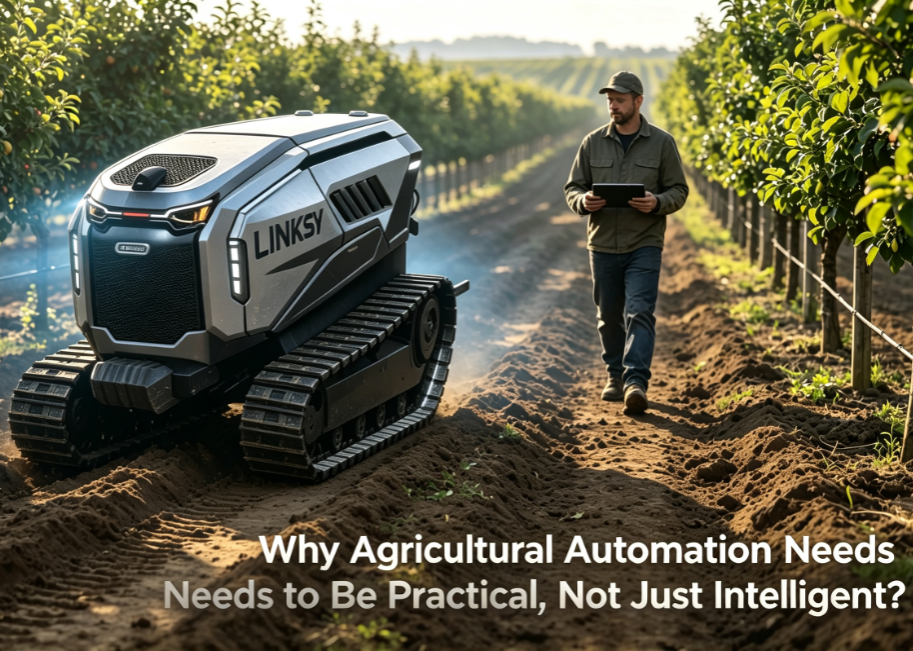
Why Repetitive Orchard Operations Are a Good Starting Point for Automation?
Orchard Work Contains More Repetition Than It Seems
Orchard work can look different from one day to another, but many individual tasks are surprisingly repetitive. A machine may need to travel along the same rows again and again, maintain a similar working speed, and follow a familiar route while carrying out spraying, mowing, or other routine operations. For the operator, however, repeating a simple task does not necessarily make it easy. Hours of driving, steering, adjusting speed and watching the machine can become tiring, especially when the same operation has to be repeated across a large orchard.
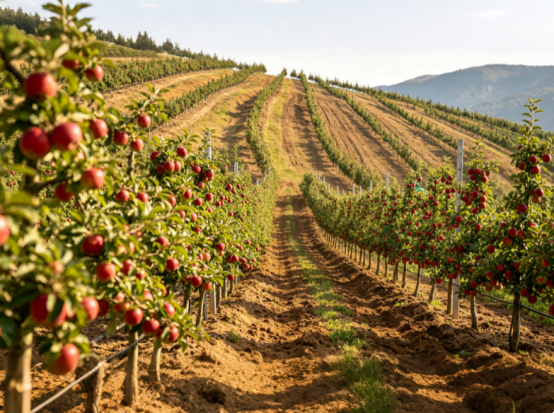
This is one reason why repetitive orchard operations can be a good starting point for automation. The goal is not to automate everything. It is to identify the parts of the job that are repetitive, predictable and time-consuming — and let the machine take care of those parts.
When the Route Is Predictable, Automation Becomes More Practical
Not every agricultural task is suitable for automation in the same way. Some operations require constant decisions and adjustments, while others are more structured. When a machine repeatedly works along defined orchard routes, autonomous navigation can make a meaningful difference. Instead of requiring an operator to continuously control the machine's direction, the system can plan and follow a predefined route while the machine carries out the assigned operation.
This is where technologies such as RTK positioning and autonomous navigation become useful. RTK provides accurate positioning, while the navigation system uses that positioning information to understand where the machine should go and how it should follow the planned route. The result is not simply a machine that can drive by itself. It is a machine that can repeatedly perform a defined field operation with less continuous manual control.
The Value Is in the Hours of Operation
For many orchard owners and operators, the biggest benefit of automation is not a dramatic change in one single operation. It is the accumulated time saved over many hours of repeated work. Consider a task that requires the machine to travel through multiple orchard rows. The operator may spend hours sitting in the driver's position, controlling direction and speed while monitoring the operation. With autonomous navigation, the operator can spend less time on continuous driving and more time supervising the overall operation.
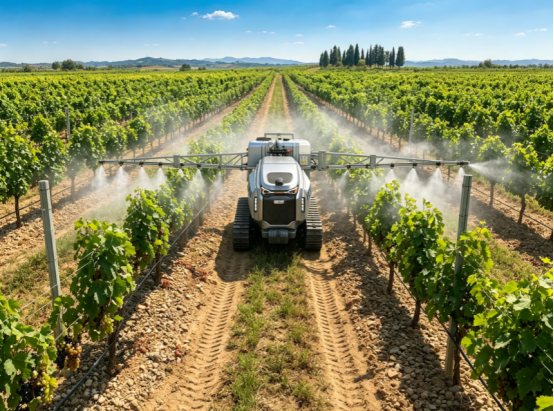
This is an important distinction. Agricultural automation is not necessarily about removing people from the process. In many cases, it is about changing what people spend their time doing. Instead of focusing on every movement of the machine, the operator can focus more on the operation itself, such as checking the working area, monitoring equipment status, preparing the next task, or managing other work.
Repetition Is Where Automation Can Deliver Practical Value
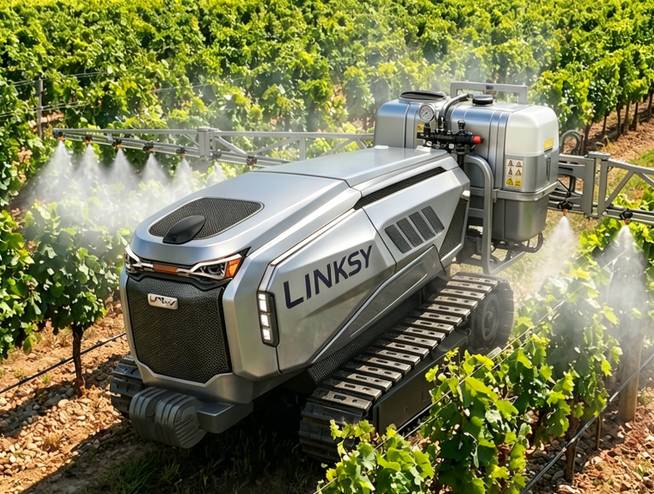
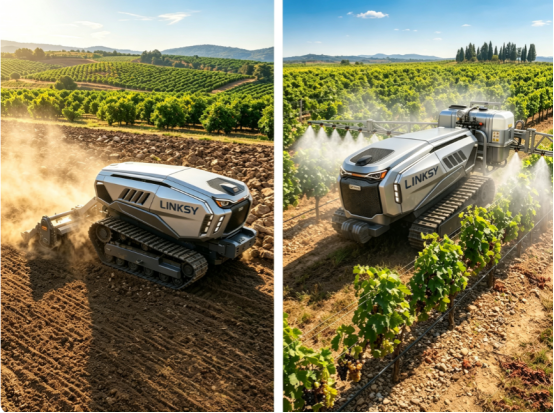
A machine does not become useful simply because it has more sensors or more intelligent functions. The technology needs to solve a real problem in the field. For repetitive orchard work, that problem is often straightforward: too much time spent doing the same thing over and over again. Spraying along orchard rows is repetitive. Mowing between rows is repetitive. Travelling along a planned route is repetitive. And when these tasks need to be performed regularly throughout the season, the amount of manual operating time can quickly add up.
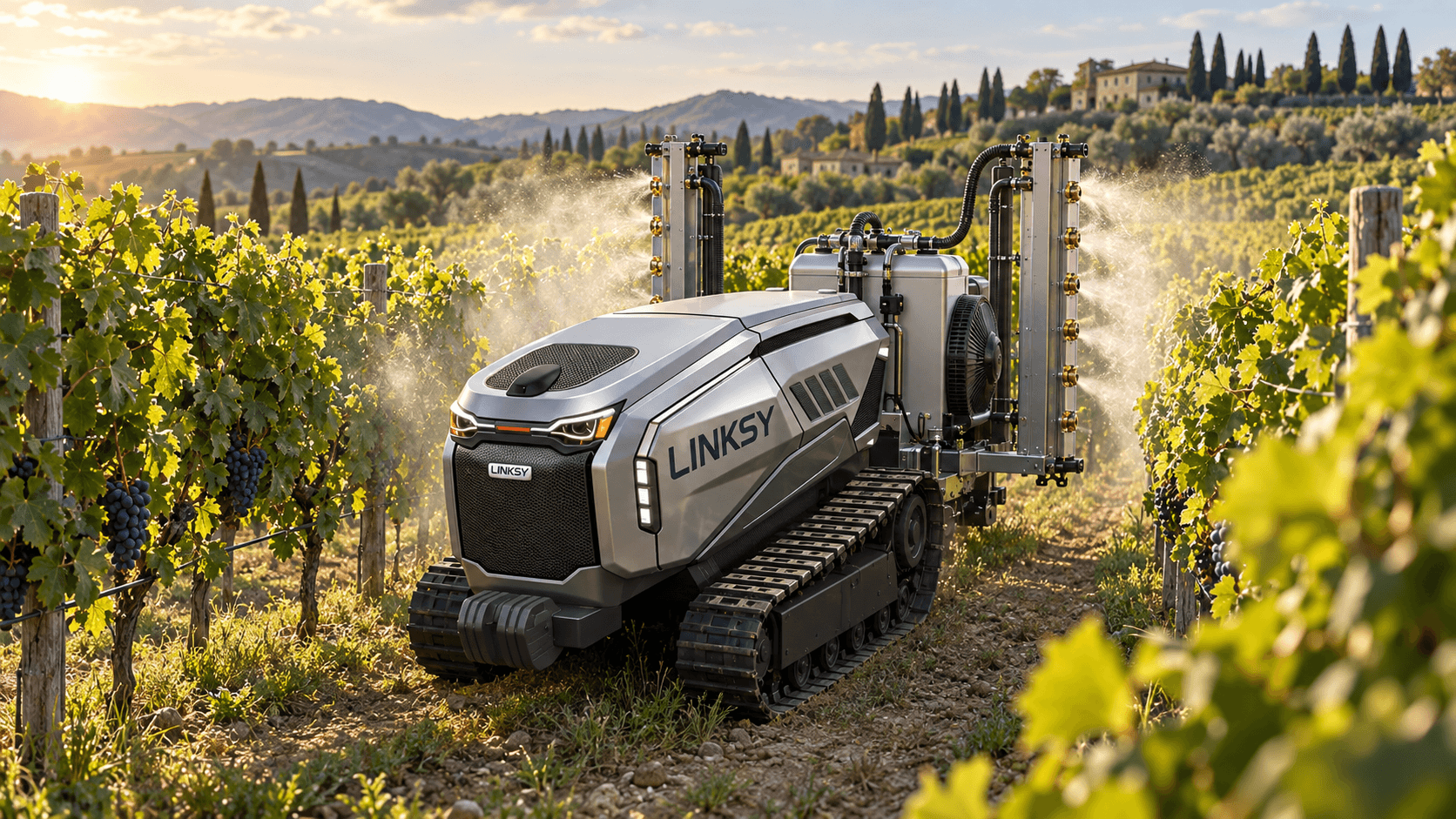
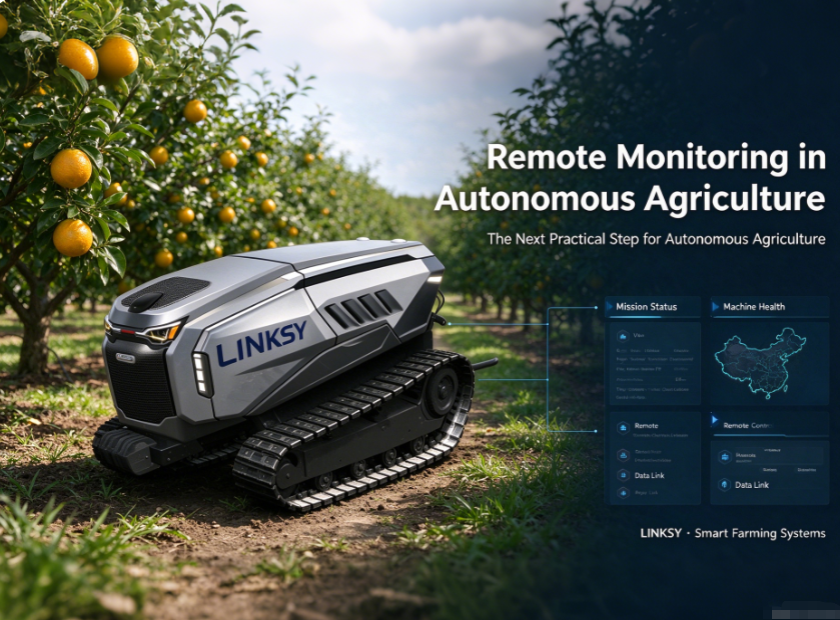
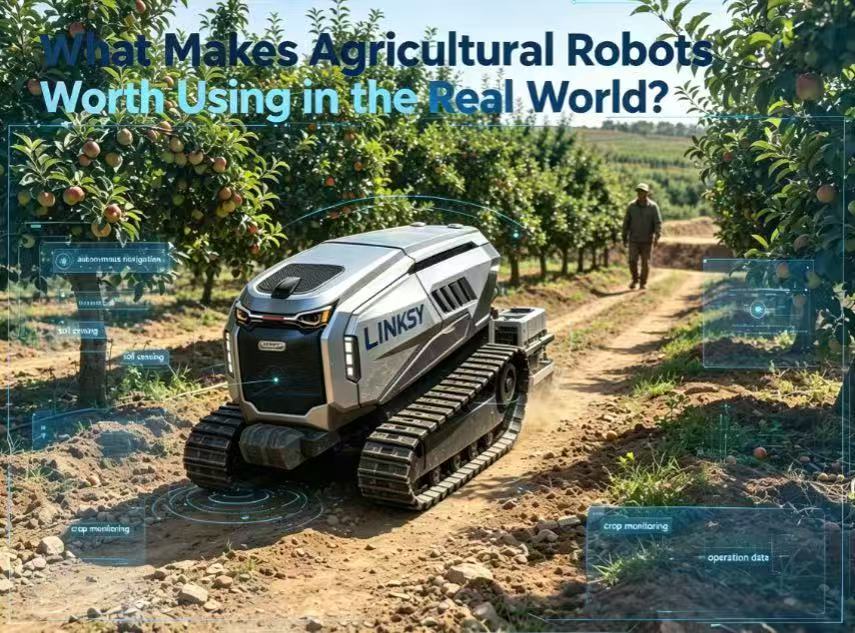
This is where an autonomous agricultural platform can provide practical value. LINKSY® 65HP, for example, combines a tracked agricultural platform with RTK positioning and autonomous navigation capabilities. The platform is designed to support different orchard operations while reducing the need for continuous manual driving. The idea is relatively simple: let the operator manage the work, while the machine takes care of more of the repetitive movement.
Start with the Repetitive Work
Agricultural automation does not need to begin with the most complicated task. Sometimes, the most valuable starting point is the work that happens every day, follows a familiar pattern, and takes up hours of an operator's time. That is why repetitive orchard operations are such a practical application for autonomous technology.
The machine does not have to replace the farmer. It simply needs to take over more of the repetitive work. For orchard operations, that can be a meaningful step toward a more efficient way of working — one where people spend less time continuously controlling a machine and more time managing the operation as a whole.