
LINKSY® 65HP for Europe: A Practical Autonomous Platform for Orchards and Specialty Crops
European agriculture is highly diverse.
A machine working in a large open field in northern Europe may face very different conditions from one operating in a vineyard in France, an orchard in Italy, or a permanent crop farm in southern Europe.
For orchards, vineyards and other specialty crops, the challenge is often not simply having more horsepower.
The machine needs to fit between rows, work with different implements, remain stable on changing terrain and perform repetitive operations efficiently.
This is where a compact and flexible autonomous platform can make practical sense.
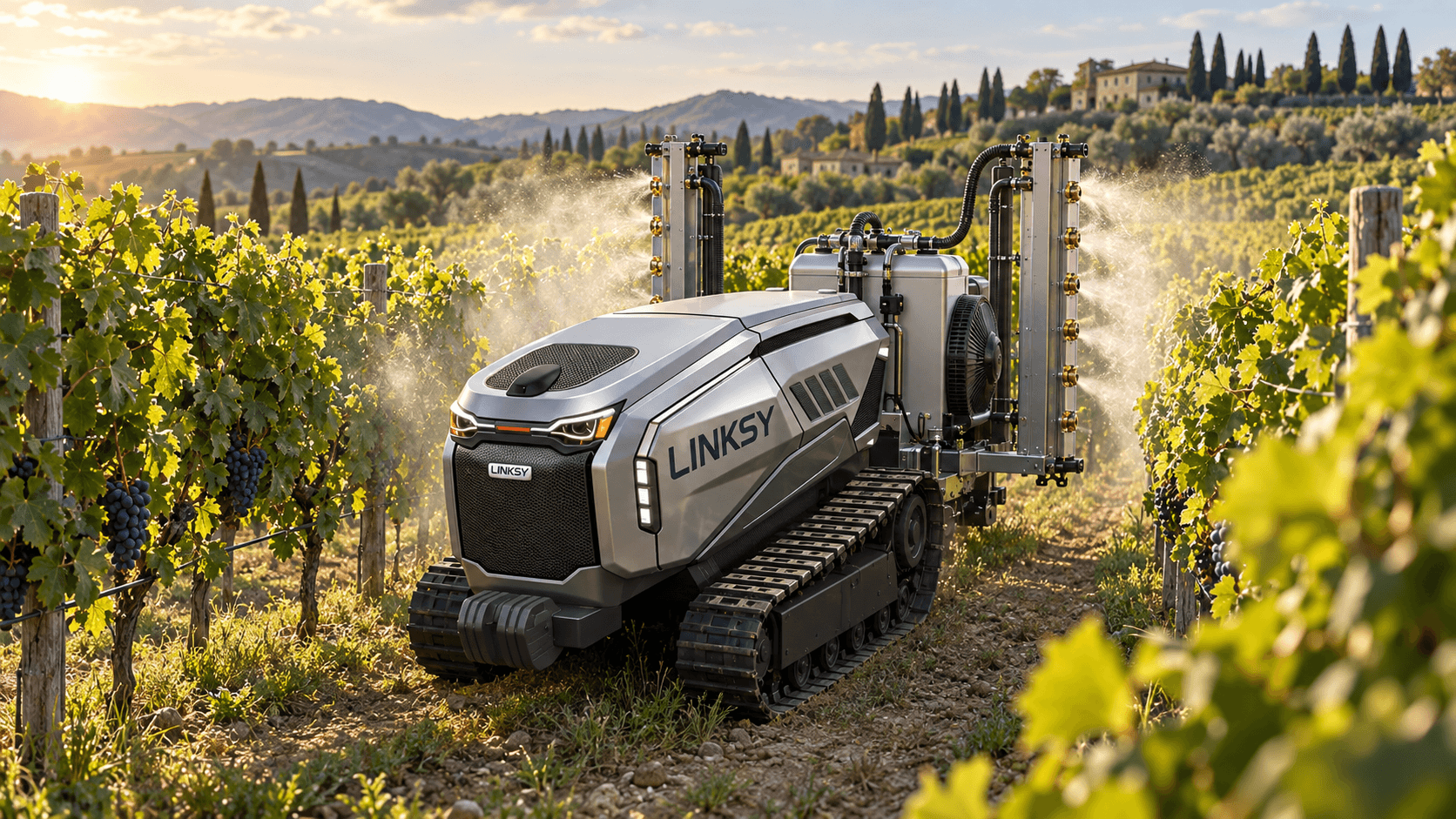
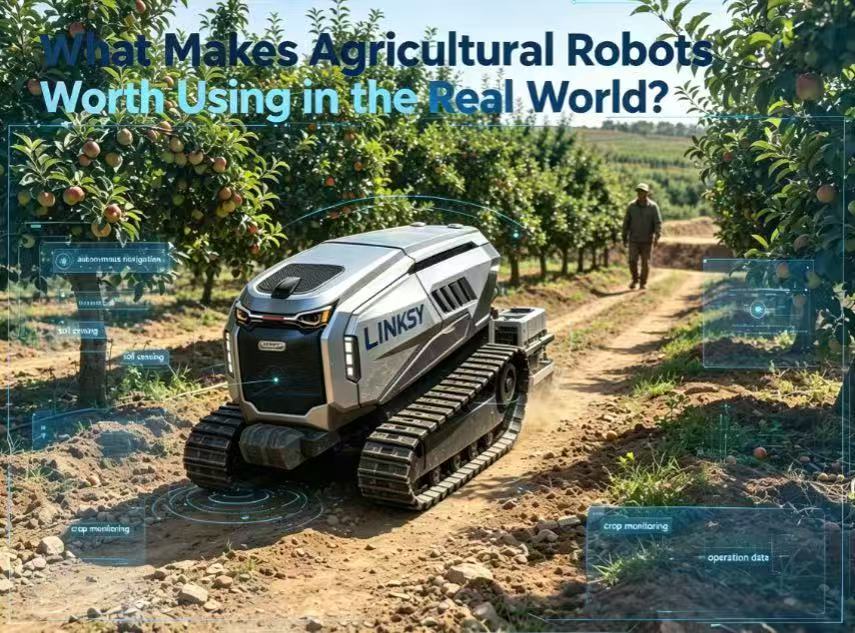
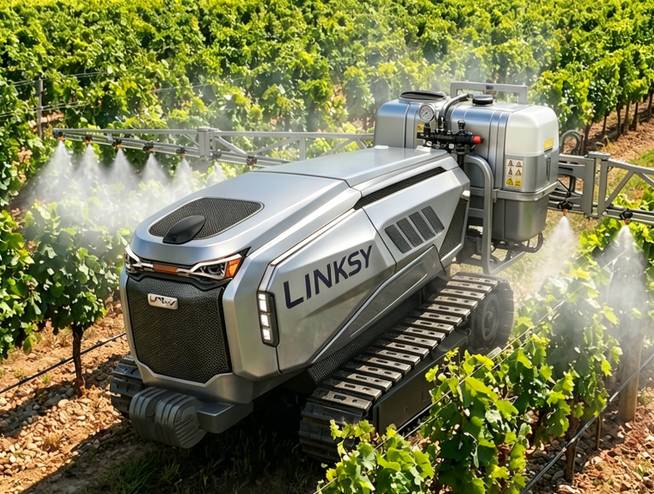
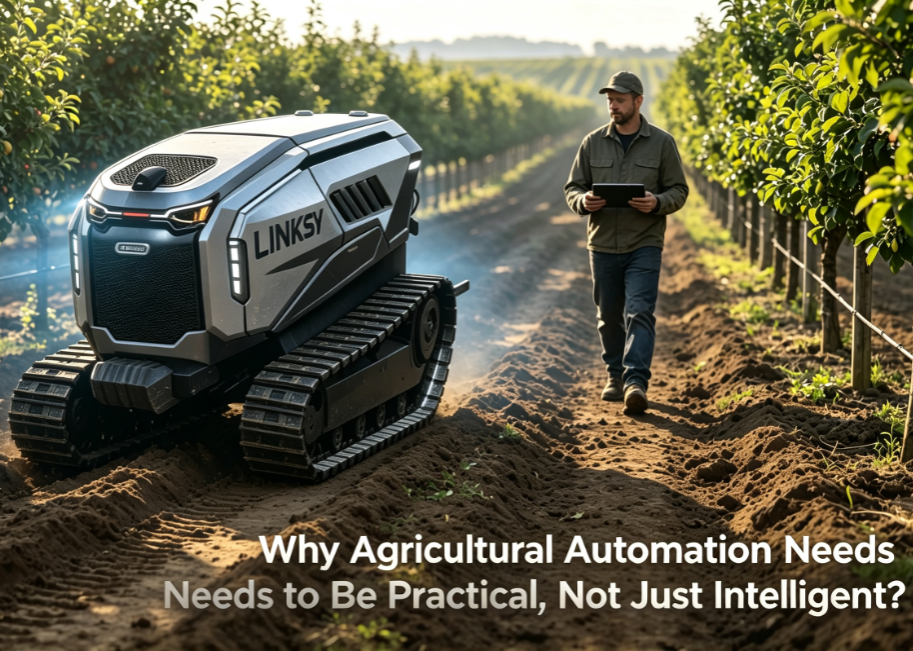
The LINKSY® 65HP Smart Orchard Platform is designed around this type of working environment — combining 65 horsepower, a compact tracked chassis, autonomous capabilities and multi-implement compatibility in one machine.
European Farming Often Requires a Different Kind of Machine
When people think about modern agricultural machinery, larger machines and higher horsepower often come to mind.
That approach works well in many broadacre applications.
But permanent crops create a different environment.
In orchards and vineyards, machines often need to travel repeatedly through relatively narrow rows. Tree canopies, vines, sloping ground and limited headland space can all affect how easily a machine moves through the field.
In these situations, machine size becomes just as important as engine power.
The LINKSY® 65HP has an overall width of approximately 1.45 meters, giving it a compact footprint for agricultural environments where available working space is limited.
The idea is straightforward:
Use enough power for the job, without making the machine larger than the working environment requires.
65HP: Power That Matches the Application
More horsepower is useful when pulling large implements across hundreds of hectares.
But orchard and specialty crop operations often involve a different set of jobs.
Mowing between rows, spraying, vegetation management, rotary tilling and transportation do not necessarily require the same level of power as heavy broadacre tillage.
For these operations, what matters is the balance between power, manoeuvrability and implement compatibility.
LINKSY® 65HP is designed around that balance.
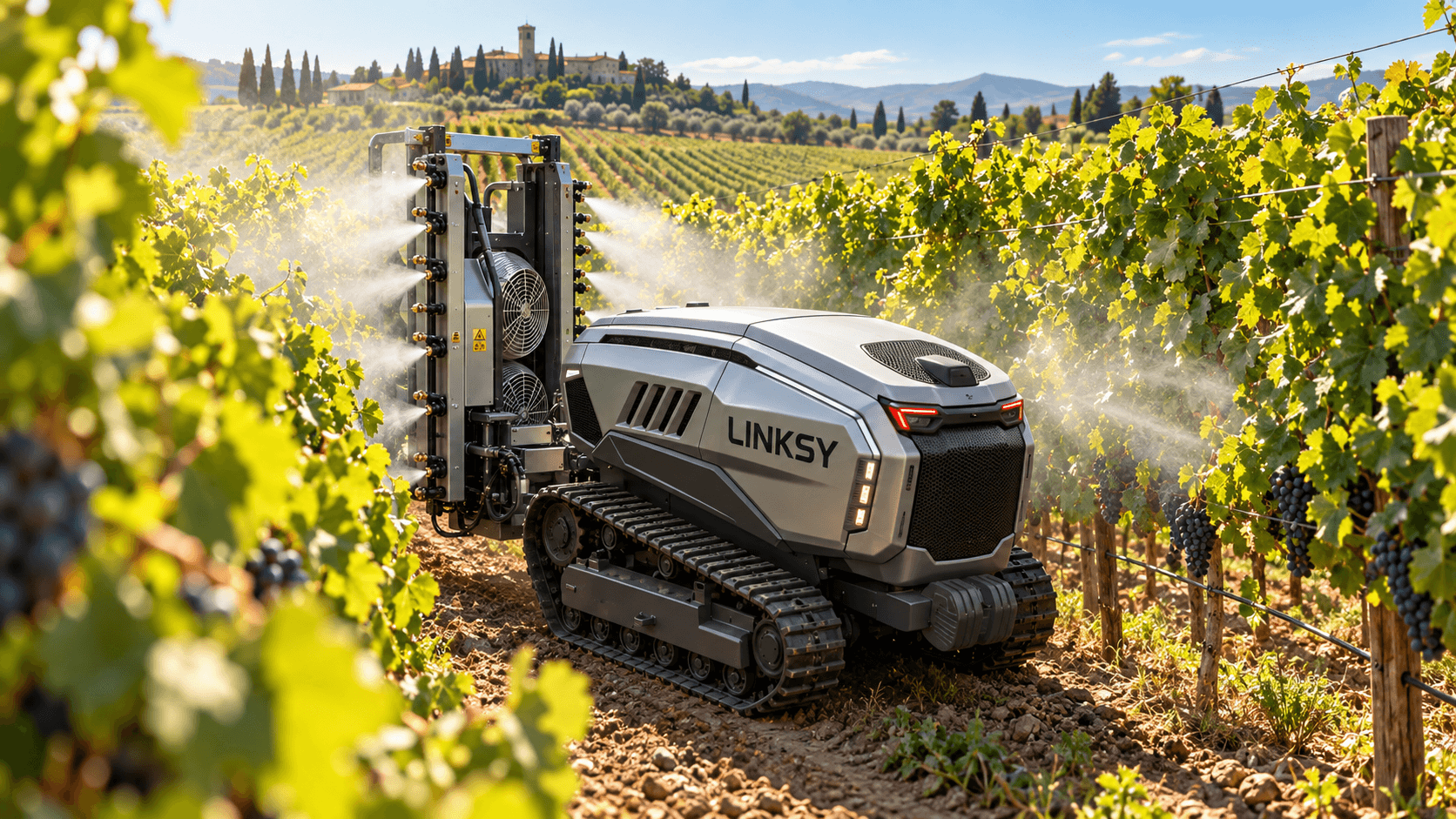
Rather than maximizing horsepower, the platform provides enough power to support a range of common orchard operations while maintaining a machine size suitable for working between crop rows. SENYTA currently positions the platform for applications including mowing, spraying and rotary tilling.
For growers, this means the question changes from:
“How much horsepower can I get?”
to:
“How much horsepower do I actually need for the work?”
That can be a more practical way to select machinery for orchards and specialty crops.
A Tracked Platform for Changing Ground Conditions
European permanent crops are not always planted on perfectly flat ground.
Orchards and vineyards can include slopes, soft soil, uneven surfaces and changing conditions after rain.
A machine that works well on a dry, flat demonstration field still needs to remain practical when the ground becomes more challenging.
LINKSY® 65HP uses a tracked chassis designed to provide traction and stability across different agricultural conditions.
The larger contact area of the tracks can also help distribute the machine's weight across the ground.
For orchard operators, this is particularly useful when the same machine needs to work throughout different parts of the season and under changing field conditions.
The goal is not simply to move through the field.
It is to move through it consistently and predictably while carrying out the job.
One Platform for More Than One Seasonal Task
Specialty crop farming involves repeated operations throughout the year.
A grower may need to manage vegetation between rows, spray crops, cultivate soil and move equipment or materials at different stages of the season.
Using a machine for only one of these jobs can limit how much value it provides over the year.
This is why implement compatibility is an important part of the LINKSY® 65HP concept.
The platform can work with different agricultural implements, allowing the same machine to support several orchard management tasks rather than being dedicated to only one operation.
For European farms where machinery utilization and operating flexibility matter, this approach can be especially relevant.
Instead of thinking of LINKSY® as one machine for one task, it is better understood as:
one intelligent platform for different jobs.
Why Repetitive Orchard and Vineyard Work Is Well Suited to Automation
Many jobs in permanent crops are highly repetitive.
A machine may travel along one row, turn at the headland, enter the next row and repeat the same process again and again.
Spraying is repetitive.
Mowing is repetitive.
Vegetation management is repetitive.
Following the same planned routes throughout the season is repetitive.
These are exactly the types of operations where autonomous navigation can provide practical value.
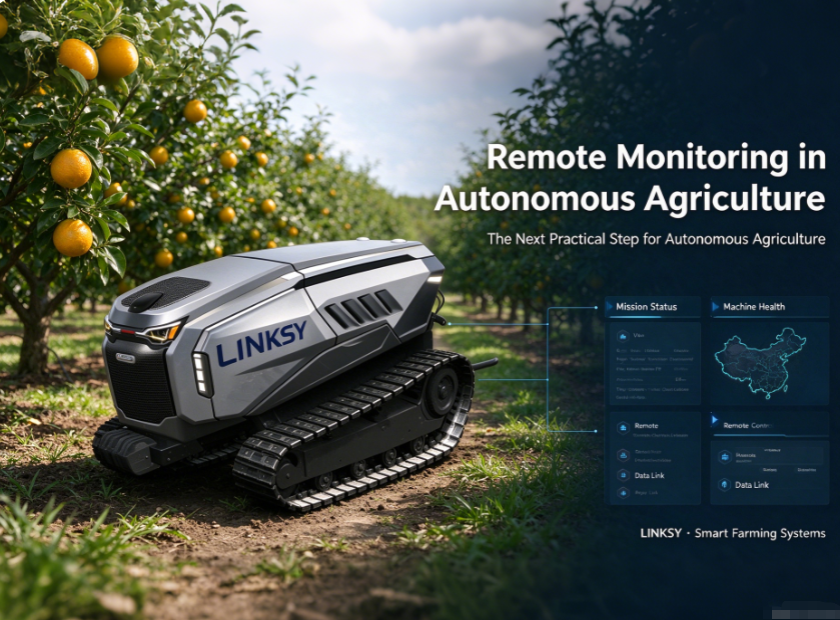
LINKSY® 65HP can be integrated with the Qianxing® Autonomous Navigation and Driving System, allowing the machine to follow planned routes with reduced dependence on continuous manual steering.
The operator's role can then begin to change.
Instead of spending the entire operation continuously steering the machine, the operator can focus more on task setup, equipment status and overall job supervision.
This does not mean removing people from farming.
It means using automation where human driving adds the least value.
A Practical Step Toward Autonomous Specialty Crop Farming
Agricultural automation does not have to begin with a completely new farming system.
Sometimes, the most practical starting point is simply taking work that already happens every week and making it easier to manage.
For orchards, vineyards and other specialty crops, that means starting with jobs such as mowing, spraying and other repetitive row-based operations.
European agricultural robotics projects are already exploring autonomous equipment in permanent crops such as orchards, vineyards, olive groves and nut plantations, reflecting the growing interest in automation for these environments.
But successful automation depends on more than adding autonomous driving to a machine.
The machine still needs to fit the crop rows.
It still needs the right amount of power.
It still needs traction and stability.
And it still needs to work with the implements growers actually use.
That is why the LINKSY® 65HP approach starts with the machine itself.
Compact enough for constrained working spaces.
Powerful enough for everyday orchard operations.
Flexible enough for different implements.
Intelligent enough to support autonomous work.
Built Around the Job, Not Just the Technology
Europe is not one single agricultural market.
A vineyard in France, an orchard in Italy and a specialty crop farm elsewhere in Europe may all have different layouts, terrain and operational requirements.
No single machine can solve every problem.
The more useful question is whether a platform can adapt to the work that farmers already need to do.
That is the idea behind LINKSY® 65HP.
It is not designed simply to bring more technology into the field.
It is designed to combine the right size, usable power, tracked mobility, implement flexibility and autonomous capability into a platform that can fit the realities of orchard and specialty crop farming.
Because for agricultural automation to work in Europe, the machine does not need to be bigger.
It needs to be better matched to the farm.